

Pet Bathtubs Go Global:
beyond the stainless-steel mainstream, find the acrylic price gap
The global pet grooming tub market was worth about USD 486 million in 2025, with North America and Europe together accounting for 67.6%. Stainless steel is the mainstream material, which leaves acrylic and FRP factories with one-piece molding and strong shaping capability a verifiable niche. This report sets out an eight-region tiering, a buyer map and a first-year execution path.
00Executive Summary
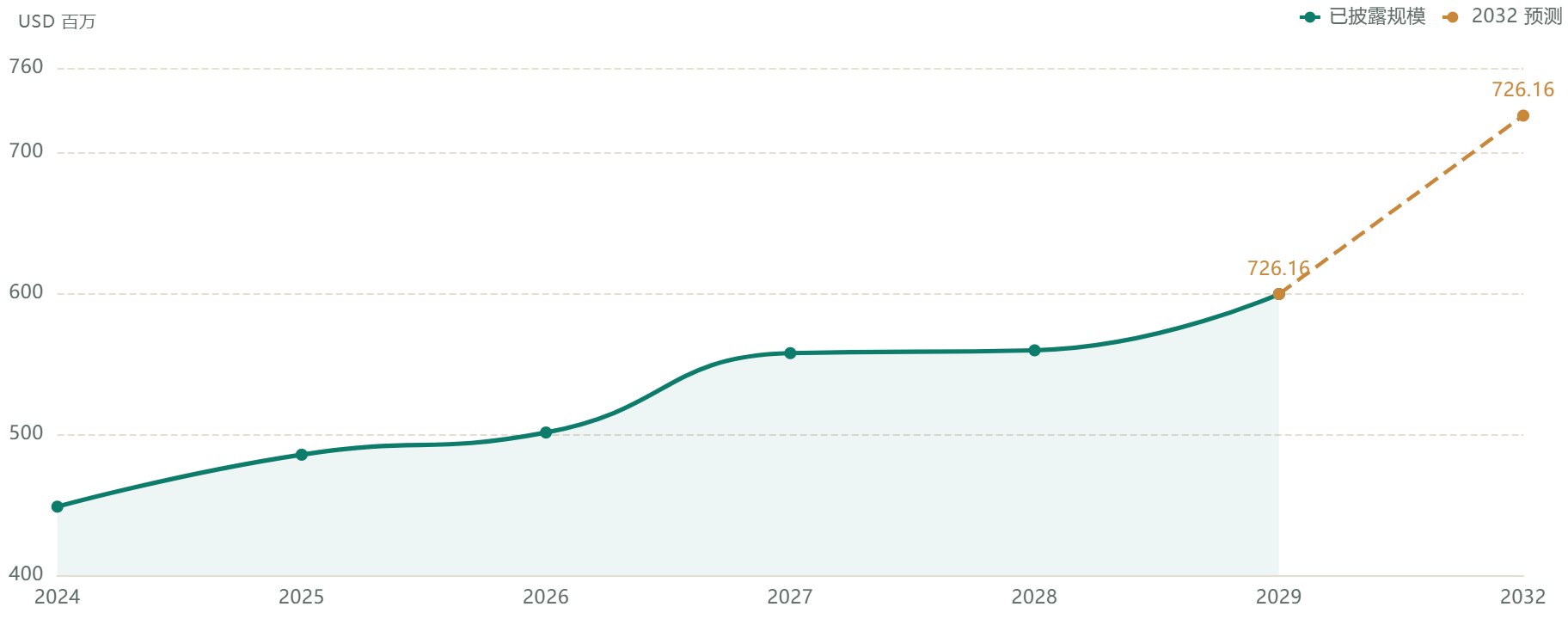
This is a commercial equipment market with a modest total size, a stable structure and a long replacement cycle. The global pet grooming tub market was about USD 486 million in 2025 and is projected to reach about USD 726 million by 2032, a CAGR of 5.92%[1]. That is too small to support a pure low-price volume play, but large enough for a mid-sized factory to build a steady export base.
One easily overlooked structural fact: stainless-steel tubs accounted for 59.8% of the 2025 market, and commercial grooming salons accounted for 64.9% of end use[1]. Acrylic and FRP are therefore not the mainstream, and there is no winning a head-on volume price war with stainless steel. Conversely, the more concentrated the mainstream is, the more valuable the design and shaping advantages of alternative materials become — one-piece molding, no weld seams, curved and colored forms, lighter weight, and built-in bubbles and thermostatic control, none of which stainless steel can offer.
Your position is clear: mid-range batch OEM/ODM at roughly USD 300–800 FOB per unit, private label available, no international certification yet. The biggest gap is not capacity but what overseas buyers can verify— third-party test reports, English installation and load-bearing documentation, and real photos of actual installations. Without these three, even the lowest quote stays at the enquiry stage.
Recommended action: make North America the P0 main battlefield and start with two lines — equipment distributors and e-commerce private-label sellers. Western Europe is P1: the highest premium, but the EU responsible person under GPSR must be resolved first. Japan and Korea are P2 reference accounts, with no dedicated ad budget.
Documentation and compliance
- Complete testing and English technical documentation for the two lead models
- Turn the material advantage into a comparable specification table
- Shoot the first batch of in-store footage usable for advertising
Channel expansion
- Push North American distributors and private labels in parallel
- Western Europe: samples first, exclusivity later
- Lock one reference account each in Japan and Korea to validate lead times
01Client Diagnosis
The following assessment is based on your brief for this engagement and publicly available category information, without an on-site factory audit. Items marked To be confirmed require your input.
Four things you already have
- Material and process: one-piece acrylic / FRP molding, with curved forms, two-tone finishes and thickened aprons — shapes stainless steel cannot produce.
- Price positioning: USD 300–800 FOB sits squarely in the middle of the USD 550–1,300 wholesale and USD 1,200–2,800 retail ranges overseas.
- Private-label ready: suitable for distributors building their own series and for e-commerce sellers wanting small modifications.
- Moderate entry threshold: one container can start shipments, so the structure supports small and mid-batch orders.
Four types of proof are missing
- Compliance documents: no CE / UKCA / ETL or other third-party documents yet, so your sales pages cannot answer the buyer's first question.
- English technical documentation: no installation drawings, load-bearing and drain specifications, electrical parameters, or cleaning and repair instructions.
- Visual assets: the biggest selling point of acrylic is how it looks; without in-store photos and video you lose half the product's power.
- Regional focus: you are approaching every market at once, spreading resources thin, with no repeat orders in any single market.
1.1 A structural problem you must face
The volume of a single acrylic tub makes it bulky cargo: one packed unit takes about 0.8–1.1 cubic meters, so a 40HQ high-cube container holds only 60–80 units in practice. Ocean freight is charged by volume, and the logistics cost per unit can approach or even exceed the ex-works price of a low-spec model. Two direct conclusions follow: do not quote large volumes DDP — stay FOB / EXW; and only high-spec, higher-priced, foldable or knock-down models are worth shipping across the ocean.
02Market Opportunity
2.1 Market size and structure
Pet grooming tubs are a category with widely divergent definitions: in 2025 the same category is reported at USD 265 million, USD 486 million and USD 1.2 billion[1][2][3], depending on whether household pet bathtubs, grooming tables and sinks are counted together. This report uses the middle figure, USD 486 million, as the primary benchmark, because its segmentation (material, function, end use) is closest to your product form.
| Segment | 2025 share | Implication for acrylic / FRP |
|---|---|---|
| Material · Stainless-steel tubs | 59.8% | Commercial mainstream; no winning a direct price fight, so avoid it |
| Material · Plastic / polyethylene | About 40% | Acrylic and FRP fall into this segment — your battlefield |
| Function · Electric lifting tubs | 44.9% | Automation is happening; electric models carry a premium but need electrical certification |
| End use · Commercial grooming salons | 64.9% | B2B decisions; durability and after-sales matter; specification sheets matter |
| End use · Veterinary clinics and hospitals | The remainder | High requirements, high unit price, slow decisions; pursue only opportunistic orders in year one |
Source: PW Consulting [1]
Another benchmark worth cross-checking is the demand side: there were about 198,616 pet grooming and boarding businesses in the United States in 2026, up 4.6% year on year[4]; total US pet industry spending was about USD 158 billion in 2025 and is projected at USD 165 billion in 2026[4]. The number of stores is growing, which shows real underlying demand for equipment replacement and new openings, not just a consumption-upgrade narrative.
2.2 Global regional B2B opportunity tiers
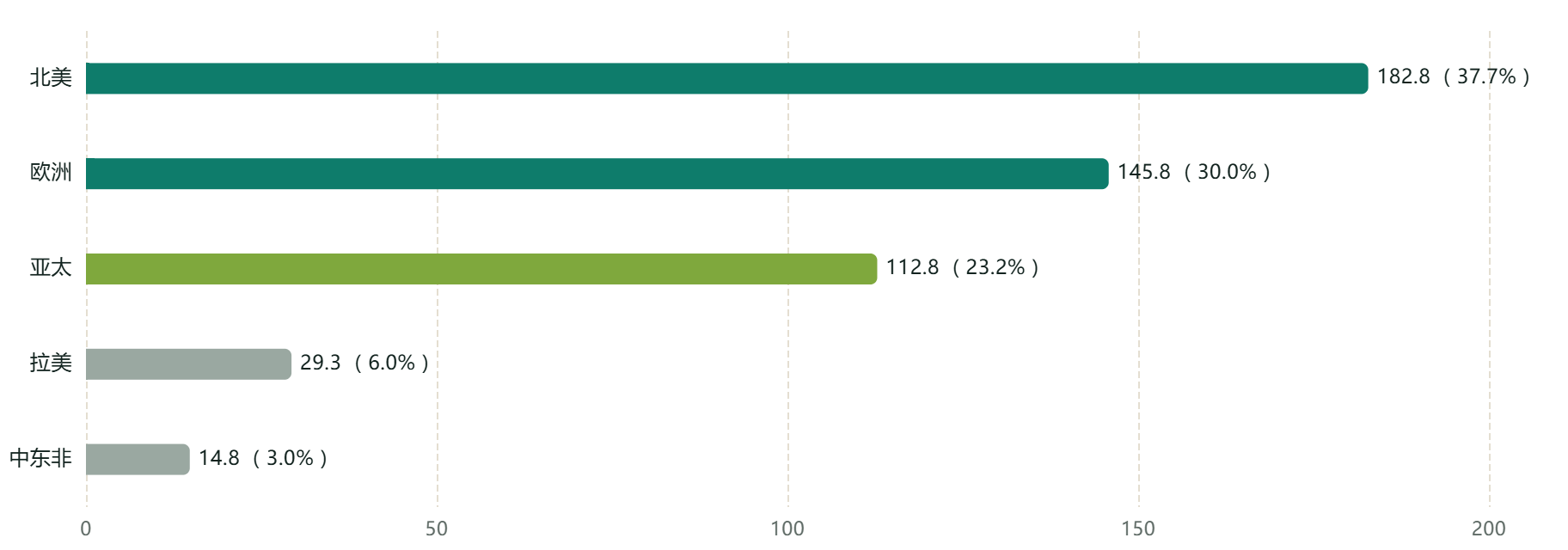
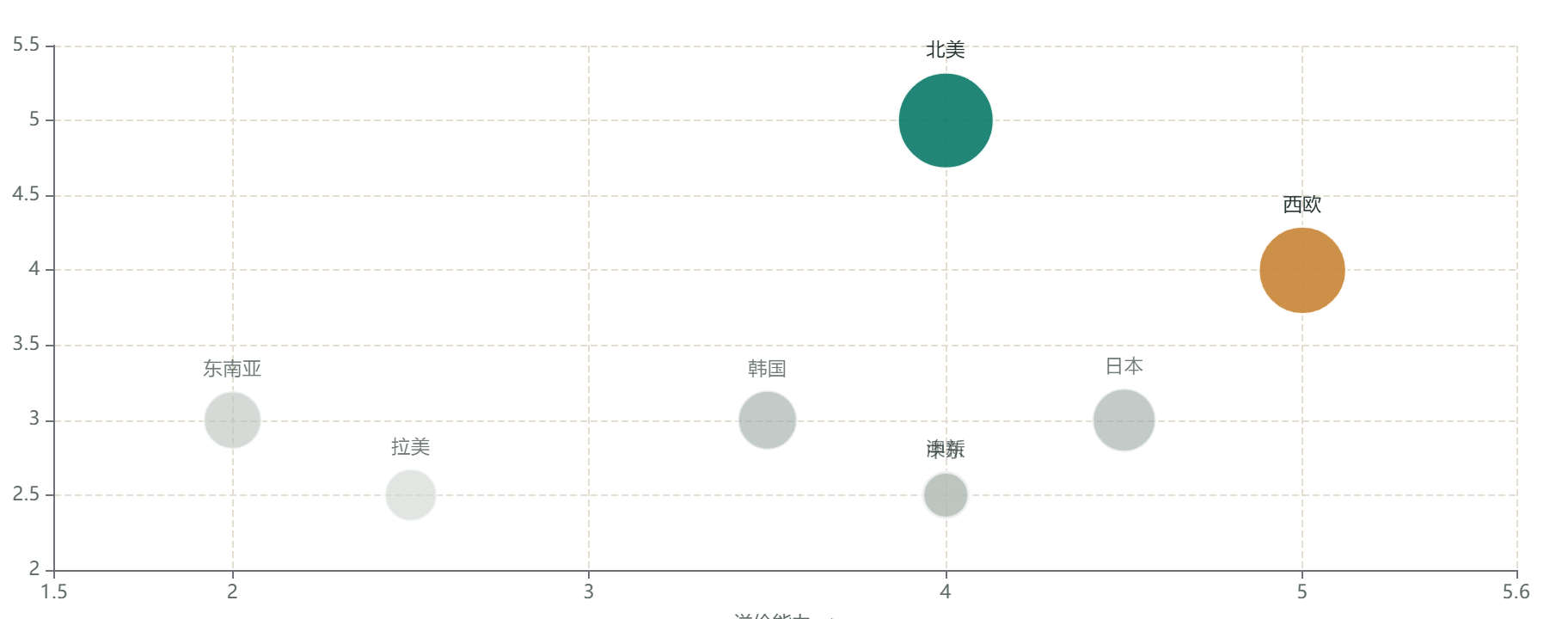
Scan first, then select. Market reference values come from the same firm's 2025 regional breakdown[1]; the score columns are YunDian+'s assessment based on product characteristics (FOB range, bulky logistics, current lack of certification). The two are listed separately and must not be read as one.
| Region | Market reference 2025 | Growth | Demand density | Premium potential | Compliance / logistics barrier | Priority |
|---|---|---|---|---|---|---|
| North America (US / Canada) | USD 183 million | About 5.5% | 5 | 4 | Medium: layered tariffs, Prop 65, spare-parts requirements | P0 |
| Western Europe (UK, DE, FR, NL, Nordics) | USD 146 million | About 5.0% | 4 | 5 | High: GPSR responsible person, EPR / PPWR, REACH | P1 |
| Japan | Included in Asia-Pacific USD 113 million | About 4.9% | 3 | 4.5 | High: PSE, Japanese documentation, batch inspection, trading-house agent | P2 |
| South Korea | Included in Asia-Pacific | About 7.0% | 3 | 3.5 | Medium-high: KC, Korean labeling, importer responsibility | P2 |
| Australia / New Zealand | Included in Asia-Pacific | About 4.0% | 2.5 | 4 | Medium: RCM, AS/NZS, state-level electrical safety | P2 |
| Southeast Asia | Included in Asia-Pacific | About 6.0% | 3 | 2 | Low to medium: low in Singapore; high tariffs and certification in Indonesia / Thailand | P3 |
| Middle East (UAE / Saudi Arabia) | USD 14.8 million | About 4.0% | 2.5 | 4 | Medium-high: SABER / SASO, project-based payment | P3 |
| Latin America (Brazil / Mexico) | USD 29.3 million | About 3.5% | 2.5 | 2.5 | High: tariffs, customs clearance, Spanish / Portuguese operations | P4 |
Market reference and growth from PW Consulting [1]; Japan, Korea, ANZ and Southeast Asia do not disclose a separate tub figure, so the combined Asia-Pacific figure is used. Scores and tiers are YunDian+ estimates. Japan and Korea growth reference their respective grooming service markets [5][6].
North America
Why: 37.6% share, nearly 200,000 grooming businesses, and electric lifting models at 44.9%, showing that equipment upgrades are genuinely happening; a mature distributor system means steady repeat orders once you are in.
Cost: layered tariffs, Prop 65 documentation, mandatory spare-parts inventory, and ocean freight eroding margin.
Western Europe
Why: 30% share and the highest premium potential; design-driven buyers pay extra for shape, color and one-piece molding, which plays exactly to acrylic's strengths.
Cost: EU responsible person under GPSR, EPR and PPWR packaging registration, REACH assessment, documentation in four or more languages.
Japan / South Korea
Why: mature service markets with high prices; Japan's grooming service market is about USD 1.17 billion in 2026[5], and Korea's grooming and cleaning market is growing at 7.0%[6]
Cost: PSE / KC, Japanese and Korean documentation, batch inspection, and a trading house or local agent is mandatory; no ad budget.
2.3 Four directions in which demand is shifting
Low step-in height and side doors become must-haves
As large dogs and aging pets become more common, groomers no longer want to lift a 30 kg dog. Side doors, removable panels and low entry heights have moved from a bonus to a reason to buy — exactly where FRP tooling has the advantage.
Self-service washing and store space efficiency
Self-service grooming stores keep expanding in North America, and the equipment must be usable without training: fixed water temperature, timed water flow, overflow protection and easy cleaning. Acrylic surfaces are smooth and easier to clean than welded structures.
SPA functions move from high-end to mid-range
Bubbles, micro-nano bubbles and thermostatic control are moving down from flagship models, and buyers now use whether a tub has bubbles as an enquiry filter. Mid-range models must reserve the function slot or they get filtered out.
Equipment appearance enters store marketing
Salons treat the tub as part of the store's visual identity and will pay for color and shape. This is acrylic's biggest structural advantage over stainless steel, and the best material for content marketing.
2.4 Price tiers and category positioning
| Tier | Typical ex-works price | Typical form | Who plays here |
|---|---|---|---|
| Low-price volume | USD 180–350 | Stainless-steel square sink, no lifting, no bubbles | Shandong stainless-steel cluster, MOQ 5–10 units |
| Mid-range (your company) | USD 300–800 | One-piece acrylic / FRP, optional side door and bubbles | Mainly acrylic factories in Foshan and Guangzhou |
| Upper mid-range | USD 1,200–2,500 | With lifting, thermostat, lighting and a full SPA system | Direct quotes from leading Foshan factories |
Comparable evidence: a Foshan industrial company publicly quotes USD 1,197–2,500 per unit for comparable acrylic SPA tubs at MOQ 1 set[7]; a Shandong stainless-steel pet sink is publicly quoted at USD 180–230 at MOQ 5 units[8]; stainless-steel models with drying are about USD 475–528[9]. Your USD 300–800 band means:avoid stainless-steel substitutes below USD 300 upstream, and use function and design to reach the USD 1,200+ band downstream, and the middle is exactly where price pressure is strongest.
2.5 Tariffs: US benchmark (P0 market)
| Item | Basis | Notes |
|---|---|---|
| Classification | HTS 3922.10.00 | Plastic bathtubs, shower trays, sinks and washbasins; acrylic counts as a plastic product |
| MFN rate | 6.5% | Column 2 rate 84.5%[10] |
| Additional tariffs | Assessed at the time of declaration | Section 301 and IEEPA-type additional measures change frequently; this report does not fix a number and the customs broker should confirm against the current list |
| Wooden crating | ISPM 15 | Solid-wood packaging must be fumigated and marked, otherwise the destination port may refuse the shipment |
| Mixed materials | Look at the primary structure | Classification may change for a stainless-steel frame with an acrylic liner; pre-classification is recommended before shipment |
2.6 Compliance checklist
United States (P0)
- Prop 65: residual acrylic monomers, plasticizers and heavy metals in pigments can all trigger warning requirements; an assessment and warning-label copy are needed.
- FTC country of origin: all products and packaging must state the country of origin; the Made in USA claim may not be used unless the standard is met.
- UFLPA: resins and chemical raw materials must be traceable; keep supplier and batch records for CBP enquiries.
- Electrical components: for models with a pump, heater or lifting mechanism, buyers usually require UL or ETL certification; the specific standard is determined by the laboratory.
- Pet product status: pet equipment is not children's product, so mandatory CPSC certification does not apply, but chains and e-commerce platforms will require third-party reports on their own.
European Union / United Kingdom (P1)
- GPSR: non-EU manufacturers must appoint an EU responsible person, and the product and packaging must show its name and contact details, otherwise the product may not be placed on the market[11]
- REACH: SVHC and Annex XVII restricted-substance assessment; acrylic and gelcoat systems must provide a composition declaration.
- EPR and PPWR: packaging must be registered under producer responsibility in each member state; the new EU packaging rules entered their applicable phase from August 2026[12]
- Electrical: electric models require CE (LVD + EMC) and WEEE; the UK uses UKCA or CE during the transition period.
Other regions (P2 and later)
- Japan: PSE for electric models, Japanese manuals and warranty, a trading house as the importer of record, and strict batch consistency.
- South Korea: KC for electric models, Korean labeling, and the importer bears product liability.
- Australia / New Zealand: RCM and AS/NZS standards for electric models, plus state-level electrical safety requirements.
- Gulf: SABER / SASO in Saudi Arabia, ESMA in the UAE; project-based orders often require third-party testing.
- Where a clause cannot be confirmed, the conclusion of the local importer and testing body prevails.
03Competitive Landscape
Only comparable manufacturers and supply-chain suppliers are listed, not retail brands. The four companies represent four different competitive routes.
| Company | Positioning | Strengths | Weaknesses | What to learn |
|---|---|---|---|---|
| Hanse Industrial, Foshan Foshan, Guangdong |
Acrylic SPA tubs, factory-direct upper mid-range pricing | Full shaping and functions: bubbles, lighting and foot-operated lifting in one; public quotes of USD 1,197–2,500 at MOQ 1 set[7] | Quotes directly against end users, so distributors are reluctant to represent it; small orders squeeze capacity for large ones | Turns a function list and lifestyle images into a standard sales page, producing high-quality enquiries |
| Shernbao, Wuhan Wuhan, Hubei |
Full range of pet grooming equipment, OEM/ODM plus own brand | Founded in 1999, integrating R&D, production and trade; covers tubs, grooming tables and dryers; complete multilingual sites[13] | A full range means tubs are not the focus, and deep shaping and new-model iteration are slow | A multilingual independent site with cross-selling across the range is the acquisition structure most worth copying |
| Edemco Dryers Colorado, United States |
US-made traditional powder-coated steel tubs | Local lead times and after-sales service, long brand history, deep distributor network; stable models such as F650 / F655[14] | High prices, conservative shaping and slow iteration; user reviews point to corrosion and slow spare-parts response[15] | Its after-sales reputation gap is the opening for acrylic's no-rust, repairable story |
| Shandong stainless-steel cluster Qingdao / Shandong |
304 stainless steel at volume, with extremely low prices and MOQs | USD 180–528 price band, MOQ 1–10 units, fast lead times, stable supply[8][9] | No design differentiation, severe commoditization, can only compete on price | Its existence shows that mid-range acrylic must make design the part that cannot be price-compared |
3.1 Three gaps you can enter
Design is the premium
Stainless-steel factories cannot differentiate on curved surfaces, two-tone finishes or thickened aprons, while salons treat the tub as part of the store's visual identity. Turning 10 colorways and 3 curve types into a catalogue is the only way to raise price without cutting it.
No rust, repairable
The long-standing pain point of established US steel tubs is corrosion and leakage[15]. Acrylic can be repaired and does not rust; turn this into a comparison page and an after-sales promise and hit the competitor where it is weak.
Leave margin for distributors
Leading Foshan factories quote end-user prices directly, leaving distributors no margin. If you insist on B2B only and do not compete at the end-user level, you can instead win distributor exclusivity intent.
04Buyer Map
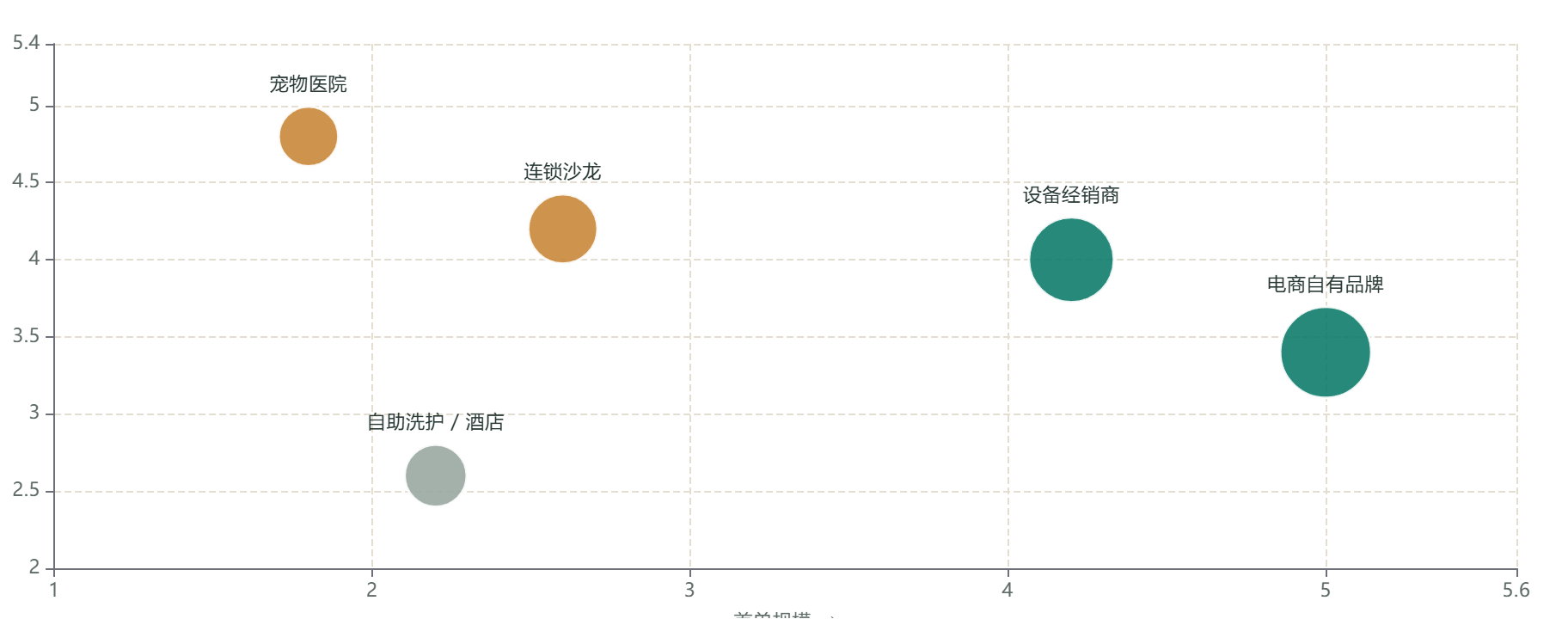
The five buyer types differ widely in first-order size, margin structure and negotiating pressure. The first targets are not the largest, but those where a first order can land and repeat orders have a rhythm.
| Buyer type | Typical first order | Annual purchasing | Purchasing profile | Channel | Priority |
|---|---|---|---|---|---|
| Equipment distributors / wholesalers | 20–50 units | 100–300 units | Look at margin, spare parts, and whether the factory competes at the end-user level; fast decisions, want regional exclusivity | Trade shows, LinkedIn, email outreach | 1 |
| E-commerce private-label sellers | 50–200 units | 300–800 units | Want small modifications, packaging and images; squeeze prices hardest, and returns and bad reviews spill over to the factory | LinkedIn, Amazon agencies, trade shows | 2 |
| Salon chains / multi-store operators | 5–20 units | 30–120 units | Value durability and cleaning efficiency; willing to pay a premium for low step-in height and side doors | Website SEO, Google, store social media | 3 |
| Pet hospitals / veterinary groups | 2–10 units | 20–60 units | High requirements, long decision chains, almost never negotiate on price; prefer stainless steel and disinfectable structures | Distributor channels, industry associations | 4 |
| Self-service washing / pet hotels | 3–8 units | 20–50 units | Extremely price-sensitive; require no-training operation, overflow protection and timers | Website, franchise systems | 5 |
4.1 Who to target first and who later
Start with distributors, because a single order brings 20–50 units with certainty and they can carry local inventory and after-sales for you;approach e-commerce private labels in parallel, because they turn design appeal directly into sales validation — they squeeze prices hard, but feedback is fastest. These two can run in parallel in North America without conflicting customer profiles.
Then salon chains, because they need a track record of stable supply and after-sales response, and are hard to enter without endorsement from the first two;leave pet hospitals for year two, as they prefer stainless steel and disinfection routines, and acrylic needs chemical-resistance documentation first.
Not in year one: government / municipal projects and main-contractor works. Such orders require local qualifications, performance bonds and 90-day-plus payment terms, which do not match the cash-flow structure of mid-range OEM.
05Go-to-Market Path
Four quarters, one main task per quarter. The targets are verifiable execution goals and do not constitute performance promises — the scope of this engagement is research only.
-
Q1 · Documentation
Turn cannot explain into can look up
Actions: lock two lead models (standard + side-door), complete the Prop 65 assessment and submit electric models for UL/ETL testing; complete English installation drawings, load-bearing, drain specification, cleaning and repair instructions; shoot the first batch of in-store footage.
Outputs: one English product specification sheet, one set of 20+ real photos, one compliance document pack.
Targets: at least 2 test items completed, 1 set of technical documentation completed.
-
Q2 · Website and first outreach
Website first, distributors next
Actions: launch the English site (10 core pages and 3 scenario pages); build a list of 300 North American distributors and 150 e-commerce sellers; send the first round of outreach emails and follow up with samples.
Outputs: website, prospect database, sample shipment records.
Targets: at least 100 indexed pages, at least 20 qualified enquiries, at least 8 sample shipments.
-
Q3 · Conversion
Turn samples into first orders
Actions: follow up sampled customers with modification proposals; start Western Europe sampling and secure the GPSR EU responsible person; launch the comparison page (acrylic vs stainless steel).
Outputs: first trial orders, Western Europe agency intent, comparison page content.
Targets: at least 4 first-order customers, at least 5 Western Europe sample shipments.
-
Q4 · Repeat orders and reference accounts
Prove supply capability through repeat orders
Actions: drive repeat orders from the first customers; lock one reference account each in Japan and Korea to validate inspection and lead times; turn real cases into reusable content.
Outputs: repeat orders, 2 reference accounts, 1 set of case assets.
Targets: repeat-order rate at least 50%, 2 reference accounts, 4 case studies.
These are execution targets set from experience in comparable categories; actual results depend on certification timelines, sample feedback and the customer's own delivery capability.
06Website Plan
The core of a factory site is not introducing yourself, but letting buyers make three judgments within three screens: what can you make, are you compliant, and how do I contact you.
| Page | Conversion task | Essential content |
|---|---|---|
| Home | Explain category and positioning in 3 seconds | One-line positioning, 3 lead models, certification marks, enquiry form |
| Product listing | Route by scenario, not by model | Four entries: salon / hospital / self-service / household |
| Product detail (standard) | Capture acrylic bathtub search terms | Dimension drawings, load-bearing, drain specification, optional functions, packed volume |
| Product detail (side-door) | Capture low step-in / large dog demand | Entry height, door structure, leak-proof design, installation guide |
| Material comparison | Explain acrylic advantages as specifications | Acrylic vs stainless steel vs FRP: weight, insulation, repairability, cost |
| OEM / ODM | Capture private-label and modification demand | MOQ, tooling lead time, modifiable items (color / apron / function slot), sampling process |
| Factory and process | Build manufacturing credibility | Production lines, molds, QC, capacity, shipping photos |
| Certification and compliance | Answer the buyer's first question | Prop 65, material declarations, electrical certification status, packaging compliance |
| Case studies | Provide comparable evidence | Sorted by market / store type, with real photos and configuration lists |
| Contact and enquiry | Lower the submission threshold | Form (category / quantity / target market), email, WhatsApp, response commitment |
6.1 Technical items
Basics
- English main site plus German / Spanish / Japanese secondary language versions
- Mobile first, product images compressed to WebP, first screen within 2 seconds
- GA4 + Meta Pixel / CAPI, with enquiry-form event tracking
- Schema: Product, FAQPage, Organization
Factory-site specifics
- A downloadable PDF spec sheet for each product in exchange for an email
- Packed volume and units per container stated separately so buyers can calculate freight
- Enquiry form includes a target market field to route compliance answers
- A spare-parts list page that directly answers what if it breaks
07Social Media
With a limited budget, run only one paid channel. Pet bathtubs are low-frequency, high-ticket B2B equipment; Facebook leads cost less than Google search, provided the creative proves this is for salons.
| Campaign | Objective | Creative requirements | Suggested monthly budget |
|---|---|---|---|
| Lead Gen leads | Collect distributor and salon emails / form fills | In-store photos + specification cards + certification marks | CNY 3,000–5,000 |
| Video Views video | Make side-door + low step-in visible | 15–30 second usage demo, no voiceover needed | CNY 1,000–2,000 |
| Retargeting | Recover people who viewed product pages without enquiring | Comparison graphic + lead-time commitment | CNY 1,000–2,000 |
The budget is a reference range for ad spend paid directly by the client to the platform, excluding any service fee; adjust based on actual account test results.
7.1 Content matrix
- Product and process (4 posts): one-piece molding process, thickened aprons, color batches
- Factory capability (2 posts): production lines, QC, container loading
- Customer cases (3 posts): real installations in stores across countries
- Owners and groomers (3 posts): real user feedback, cleaning and maintenance tips
- Website: capture search demand, host spec sheets and cases
- Facebook / Instagram: main paid channel, short demo videos
- LinkedIn: proactive outreach to distributors and private-label sellers
- Pinterest: store design inspiration, long-tail traffic
- Email: monthly outreach to the list, repeat-order reminders
Rhythm: pick topics in week one, shoot in week two, run ads in week three, review in week four. Target asset reuse of at least 60% — one in-store shoot should yield at least 3 short videos, 4 stills and 1 case study.
08Budget Framework
The scope of this engagement is research and does not include a service quote. This chapter only estimates costs your company must bear itself, for internal approval and cash-flow planning, and is not a service quote of any kind.
| Item | Description | Estimated range (CNY) | Necessity |
|---|---|---|---|
| Prop 65 assessment and labeling | Heavy-metal and plasticizer screening for acrylic and gelcoat systems | 5,000–15,000 | Required for North America |
| UL / ETL for electric models | For models with a pump or heater, priced per model | 40,000–80,000 / model | Required before electric-model orders |
| CE (LVD + EMC) | EU notified body or accredited lab for Western Europe electric models | 15,000–30,000 / model | Required before taking Western Europe orders |
| English technical documentation | Installation drawings, load bearing, drain specification, repair instructions | 8,000–15,000 | Required |
| Photography and video | In-store scenarios + factory process, about 60 assets | 20,000–40,000 | Required |
| Samples and shipping | About 20–30 sample units a year, including international courier | 30,000–60,000 | Required |
| Advertising (paid directly by client) | Mainly Facebook, from CNY 5,000 per month | 50,000–70,000 / year | Optional |
| Trade shows (visiting or small booth) | North American or European pet product shows | 30,000–80,000 | Optional |
First-year mandatory spending (excluding advertising and trade shows) is about CNY 120,000–220,000; including optional items the total is about CNY 200,000–370,000. This money does not buy traffic but verifiable qualifications and assets— the prerequisite for quoting through any channel later.
8.1 Payback logic
At USD 500 FOB per unit and a 25% gross margin, each unit contributes about USD 125 (about CNY 900). If you close 4 customers in year one at 30 units each, 120 units in total, gross profit is about CNY 108,000; to reach a CNY 200,000 payback line you need about 220 units or a higher specification per unit.
The conclusion of this calculation is not how many units you must sell, but that:low-spec volume cannot cover the fixed spending on compliance and content, so you must use upper mid-range configurations (side door, bubbles, lifting) to lift gross margin per unit above CNY 1,500 for the payback model to work.
09Risks & Actions
| Risk | Impact | Response | Owner |
|---|---|---|---|
| Changes in tariffs and additional measures | Quotes expire, customers drop off | State a 30-day validity on quotes; assess duties at the time of declaration; prioritize upper mid-range models to dilute the tariff impact | Both parties |
| Bulky freight eroding margin | No profit on low-price models | Optimize packaging and knock-down structures; quote FOB only; offer tiered pricing by container volume | Factory |
| No certification stops enquiries | Chronically low conversion | Complete the two most critical tests in Q1 and bridge with partial compliance + a timeline | Factory |
| Doubts about acrylic scratch resistance and yellowing | Buyers switch to stainless steel | Provide film thickness and material specifications, a cleaning guide and a repair kit; turn the weakness into a service | Factory |
| Bad reviews from e-commerce sellers spilling over | Brand and platform risk | Define packaging and acceptance standards in the contract; require private-label customers to handle end-user after-sales | Both parties |
| Dependence on a single market | Policy or exchange-rate swings amplified | Focus on North America but keep the Western Europe sampling line; build a second market from Q3 | Factory |
9.1 Capability checklist for your confirmation
- Monthly capacity and maximum single-batch capacity, and whether 50+ unit consolidated shipments are possible
- Current number of molds and tooling lead time (sampling time for a new curve or new apron)
- Whether electric components (pump, heater, bubbles, lifting) are in-house or outsourced, and whether suppliers hold certification
- Actual price list (by model, by container volume) and committed lead times
- Whether you already have export records, destination countries and customer types
- Acceptable payment methods and minimum payment terms
9.2 One-line summary
Design-led acrylic grooming tubs, built for salons, ready for private label.
Use one-piece shaping capability as the spear and private-label mid-batch supply as the shield: first build repeat orders through North American distributors and private-label sellers, then use that record to open the high-premium Western Europe market. Acrylic does not need to beat stainless steel; it only needs to be irreplaceable in the demand that stainless steel ignores.
Next step: confirm the six capability data points in section 9.1 and we can turn the lead models, target distributor list and first-round outreach messaging into a one-page execution sheet within two weeks.
About YunDian+
We deliver full-funnel export marketing from infrastructure → acquisition → conversion → review; we do not sell one-off traffic. What a factory needs is not a single exposure but a set of assets that overseas buyers can verify and that keeps generating enquiries.
10.1 Nine core services
| No. | Service | Description |
|---|---|---|
| 01 | Hit-product co-creation | Co-create, from category data and competitor gaps, a lead product that can be searched and price-compared |
| 02 | WordPress / Shopify website building | Factory and brand sites, with multilingual support, structural optimization and enquiry flows |
| 03 | SEO / GEO | Dual optimization for organic search and generative engines, so your products appear in AI answers |
| 04 | Advertising | Campaign management and account hosting on Facebook, Google and other platforms |
| 05 | Content and social media | English topic planning, copywriting, video scripts and social content planning |
| 06 | LinkedIn proactive outreach | Targeted outreach to distributors and purchasing decision-makers, plus account system setup |
| 07 | 2C livestreaming | Livestream scenario design and execution for end consumers |
| 08 | B2B conversion management | Enquiry scoring, follow-up SOPs, sales training and ongoing coaching |
| 09 | Export + AI agents | Use AI agents for initial enquiry screening, content production and multilingual replies |
10.2 Four-phase system
-
Phase 01 · Infrastructure
AI website building
Organize products, processes and certifications into structured assets that can be searched and cited by AI.
-
Phase 02 · Acquisition
Multi-platform advertising
Allocate budget across Facebook, Google and LinkedIn, with one main channel and the rest supporting.
-
Phase 03 · Conversion
AARRR model
From enquiry to first order to repeat order, define metrics and actions for every step instead of relying on individual salespeople.
-
Phase 04 · Review
Data iteration
Review keywords, enquiry sources and sales cycles monthly, and feed the findings back into content and product adjustments.
10.3 Core team
| Role | Lead | Responsibility |
|---|---|---|
| Commercial and overall project lead | Cola Ge | Needs diagnosis, solution design and delivery management, working with manufacturing clients going global |
| Website building and SEO / GEO | Project team | Site structure, multilingual content, structured data and organic search optimization |
| Advertising and content | Project team | Media strategy, creative scripts, monthly social media rhythm |
10.4 Contact
Zhongshan Kesun Technology Co., Ltd.
https://www.ydjia.com

All data in this report is sourced; scores marked YunDian+ Assessment are internal judgments and do not constitute market facts or performance promises.
Key takeaways
- The global pet grooming tub market was about USD 486M in 2025, with North America and Europe at 67.6% combined — North America is the only P0 worth an annual budget
- Stainless steel holds 59.8% and commercial salons 64.9% of end use — no winning a head-on price fight; one-piece molding and shaping are where acrylic earns its premium
- One unit is 0.8–1.1 cbm of bulky freight and a 40HQ holds only 60–80 units; RMB 120k–220k of year-one fixed spend only pays back with upper mid-range models above CNY 1,500 gross margin
FAQ
What does this report cover?
Overseas research for a pet grooming tub factory: how the USD 486M global market is layered, why North America is the only P0, what gives acrylic its premium in a market where stainless steel holds 59.8%, an eight-region buyer map and four-quarter path, website and social media structure, and how to spend RMB 120k–370k in year one.
Which industry and market does the report cover?
Industry: Pet Products. Keywords covered: 宠物浴缸 · 宠物美容 · 亚克力 · OEM/ODM · 北美市场 · 佛山.
How long is the report and which languages are available?
26 pages, available in Simplified Chinese, Traditional Chinese and English, all readable online in full.
How can I get the full report?
Read the full text on this page, or click "Download PDF" for a free copy; add the advisor on WeChat shown on this page for an industry-specific research checklist.
Related reports
Building Materials · 2026-11-19
Entering Africa's Project Channel: Whole-House Custom Cabinetry & Aluminium Windows and Doors, Turning East Africa into the First Reference Market
Power & Electrical · 2026-11-19
Toughened Glass Insulator Overseas Research: Turn Six Million Pieces of Capacity into a Technical File a Procurement Engineer Reads in Three Minutes
Apparel & Fashion · 2026-11-19